

Abstract:
NASA's Global Flood Product has provided near real-time daily flood maps since 2012 using the Moderate Resolution Imaging Spectroradiometer (MODIS). With MODIS's impending retirement, NASA introduced in 2025 a successor flood product using the Visible Infrared Imaging Radiometer Suite (VIIRS). To improve the VIIRS product using newer AI methods, we developed VIIRS Machine Learning Fractional Water Detection (ML-FWD): a deep learning algorithm that estimates fractional water extent from 375 m surface reflectance imagery. Trained on over 95,000 global water observations from the Dynamic World Sentinel-2 land-cover classification, ML-FWD achieves a test R2 of 0.83 with minimal bias (mean error of -0.6% water extent) and consistent performance across 14 global biomes. ML-FWD outperforms existing VIIRS algorithms from NASA and NOAA by 0.27 and 0.12 in absolute R2—a 141% and 35% relative improvement, respectively, when tested across 100 flood events. ML-FWD also outperforms the existing NASA algorithm on expert visual inspection of commonly known challenges of false-positive detection across 19 images. Our study demonstrates that combining deep learning and medium-resolution observations improves surface water extent estimates from moderate-resolution sensors such as VIIRS. Upon NASA's approval, public deployment of ML-FWD will make the updated NASA Global Flood Product the first ML-based, routinely generated global flood dataset with daily coverage. This anticipated update will ensure the public has access to accurate information with daily revisit and short latency, critical for flood monitoring, response, and relief across a range of sectors.
Acknowledgements
Many thanks to Jonathan Giezendanner (Massachusetts Institute of Technology, previously University of Arizona) who initiated the project and developed the global deep learning framework including the model training data generation; PIs Beth Tellman (University of Wisconsin-Madison, previously University of Arizona) and Fritz Policelli (NASA Goddard Space Flight Center) who secured funding for the project and provided oversight and supervision; and collaborators, Dan Slayback (NASA), Rui Zhang (NASA), and Rohit Mukerherjee (Pacific Northwest National Lab, previously University of Arizona).
This research includes contributions from Ph.D. Student Alex Saunders. Learn more about his role and related work on his website: https://alex-saunders00.github.io/global-inundation-viirs/
Research Personnel:
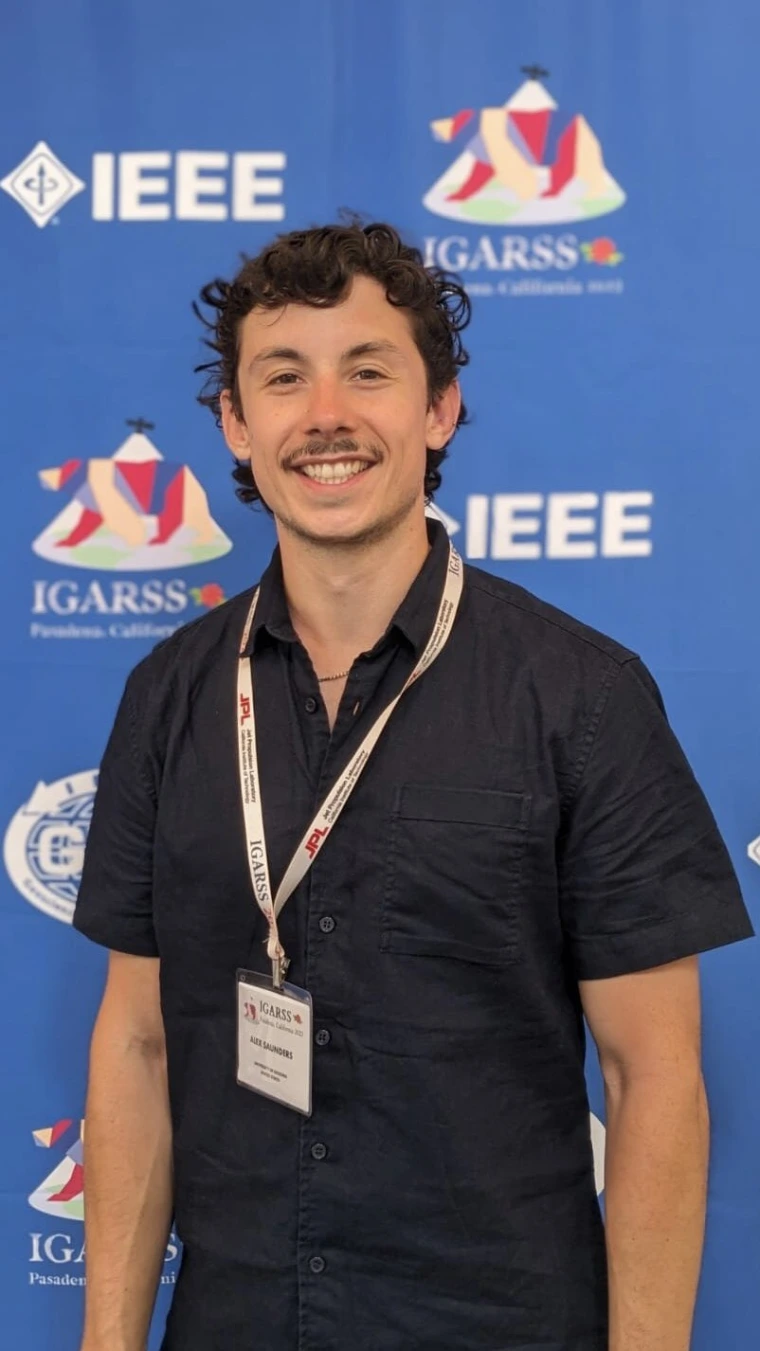
Alexander Saunders
Ph.D. Student
-
Climate risk finance
-
Disaster economics
-
Resilience and adaptation in agricultural settings